
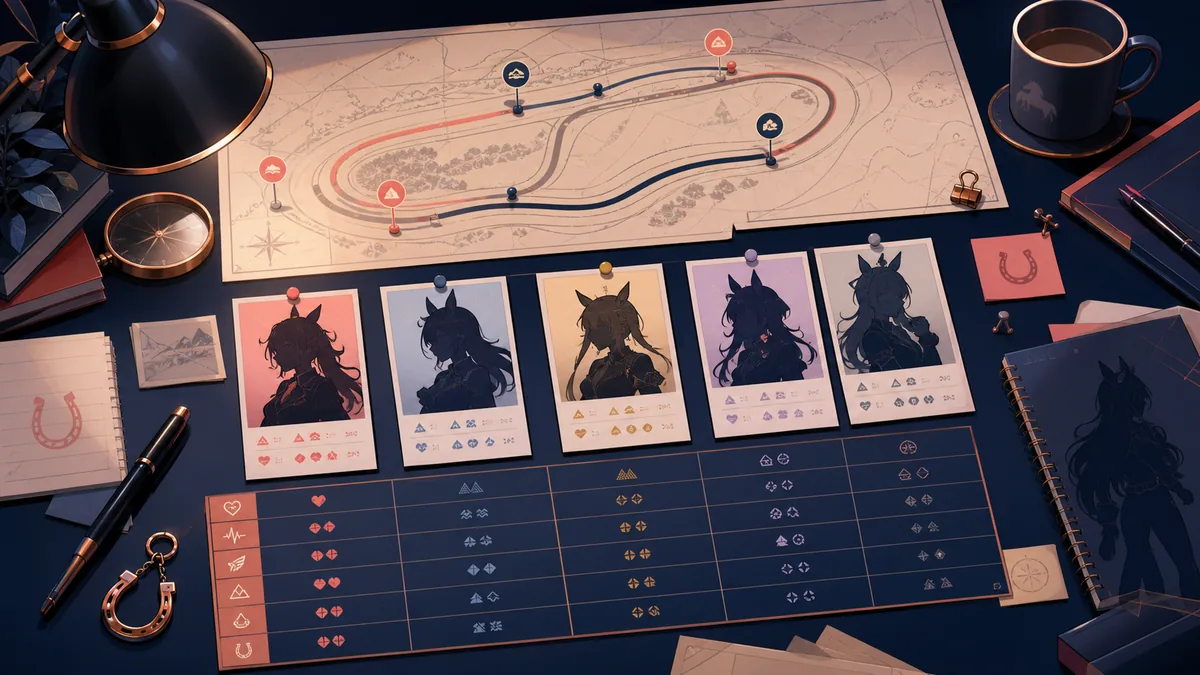
Tier Lists richtig lesen
Eine Tier List hilft beim Eingrenzen, ersetzt aber keinen Rennplan. Ein starker Charakter kann in einer anderen Distanz oder Oberflaeche deutlich schlechter sein.
Trenne Charakter-Ranking und Supportkarten-Ranking: Das eine waehlt den Runner, das andere die Trainingsressourcen.
Global-Spieler sollten Server, Datum und JP-Annahmen pruefen, bevor sie eine Empfehlung kopieren.
Wenn du nach einer Umamusume Charakter Tier List oder den besten Umamusume-Charakteren suchst, gilt dieselbe Grenze: Bewerte den Trainee fuer ein konkretes Rennen statt fuer eine universelle Rangliste. Entscheidend ist der Fit zwischen Kit und Strecke.
Eine Umamusume Pretty Derby Tier List sollte Server und Stand des Inhalts nennen: Global, JP, aktuell oder zukuenftig. Nutze sie als Vorauswahl und pruefe danach Supportkarten, Vererbung und Simulation.
Tier List als Shortlist nutzen
Notiere Distanz, Oberflaeche, Laufstil, Unique Skill, Vererbung und Deckschwaeche.
Was einen Charakter high tier macht
Starke Trainees verbinden mehrere Vorteile.
| Wichtige Ranking-Faktoren | Impact | Check |
|---|---|---|
| Distanz- und Boden-Aptitude | Die Aptitude entscheidet, ob der Runner das Zielprofil realistisch erreicht, ohne Erbschaftsplätze zu verschwenden. | Prüfe zuerst die Zielstrecke und entscheide dann, welche roten Faktoren noch fehlen. |
| Running style fit | Runner-, Leader-, Betweener- und Chaser-Builds brauchen unterschiedliche Positionierung, Beschleunigung, Stamina und Skill-Timings. | Vergleiche den besten Laufstil des Charakters mit der Rennphase, in der meist der entscheidende Zug erfolgt. |
| Timing der Unique Skill | Auch eine bekannte Unique Skill kann schwach sein, wenn sie zu früh, zu spät oder unter unpassenden Rennbedingungen auslöst. | Lies die Aktivierungsbedingungen und teste die fertigen Werte, statt nur nach dem Namen zu urteilen. |
| Growth bonuses | Wachstumsboni verändern, welche Supportkarten effizient sind und welche Werte schwer fertig werden. | Passe die Wachstumsboni an dein Supportdeck und den geliehenen Slot an. |
| Inheritance pressure | Manche Charaktere brauchen bestimmte rote Faktoren, Eltern oder vererbte Skills, bevor sie praktisch einsetzbar sind. | Prüfe, ob dein Elternpool fehlende Distanz-, Boden- oder Skill-Anforderungen lösen kann. |
| Account- und Serverkontext | Eine starke JP-Empfehlung kann Karten, Szenarien oder Charaktere voraussetzen, die noch nicht für jedes Global-Konto verfügbar sind. | Bestätige Server, Datum und Annahmen des Rankings, bevor du es übernimmst. |
Der beste Pick ist oft der mit den wenigsten offenen Anforderungen.
Bester Fit nach Distanz
Starke Trainees verbinden mehrere Vorteile.

| Focus | Traits | Deck | Check |
|---|---|---|---|
| Sprint | Schnelle Beschleunigung, sauberes Speed-Wachstum und zuverlässige Skill-Timings auf kurzer Distanz. | Speed, Power und Wit können stark gefordert sein, weil wenig Zeit bleibt, eine schlechte Positionierung auszugleichen. | Prüfe, ob der Build schnell die Endgeschwindigkeit erreicht und nicht von späten Skills nach der Rennentscheidung abhängt. |
| Mile | Flexible Speed-, Power- und Positionierungsoptionen mit einem zum Kurs passenden Laufstil. | Decks brauchen oft genug Wit für Konstanz und müssen trotzdem Speed und Power fertig ausbauen. | Simuliere mehrere Varianten, denn kleine Skill-Timing-Unterschiede können die Siegrate stark verändern. |
| Medium | Ausgewogenes Kit, nützliches Unique-Skill-Timing und genug Stamina oder Erholung. | Das Deck darf nicht einen Wert überbauen und dabei Stamina, Power oder Wit offenlassen. | Führe Stamina- und Rennsimulationen durch, bevor du einen Speed-lastigen Build für sicher hältst. |
| Long | Ein starker Stamina-Plan, Erholung und Unique Skills, die auch spät im Rennen noch zählen. | Stamina-Supports, Erholung und Vererbungsplanung zählen mehr als das reine Tier-Label. | Prüfe zuerst die Stamina-Marge und vergleiche danach Endplatzierung und späte Beschleunigung. |
| Parent farming | Einfache Trainingsrouten, nützliche Faktoren und wiederholbare Rennpläne. | Konstanz, stabile Events und Rennboni können wichtiger sein als die höchste PvP-Leistung. | Nutze einen Planer, um Faktorziele, Rennen und Trainingseinheiten aufeinander abzustimmen. |
An Supports und Eltern anpassen
Dein Account entscheidet, ob der Runner wirklich baubar ist. Fehlende Supports oder Eltern senken den praktischen Wert.
Waehle den saubersten Build-Pfad mit weniger Vererbungsdruck und besserer Stamina-Marge.
Der beste Umamusume-Charakter ist nicht immer Platz eins einer allgemeinen Tier List. Waehle zuerst das Zielrennen und pruefe dann Distanz, Laufstil, Unique-Skill-Timing, Vererbung und Supportdeck.
Owned support fit
Kann dein Deck die nötigen Werte fertigstellen, ohne jede fehlende Rolle leihen zu müssen?
Parent pool fit
Lösen deine Eltern die fehlende Distanz, den Boden, die Unique Skill oder den Faktordruck?
Scenario fit
Belohnt das aktuelle Trainingsszenario die Werte und Events, die dieser Charakter braucht?
Testing fit
Besteht der fertige Build Stamina- und Rennsimulationstests, statt nur auf dem Papier gut auszusehen?
Validierungsablauf
Nutze diesen Ablauf, wenn mehrere Charaktere fuer dasselbe Event gut wirken.
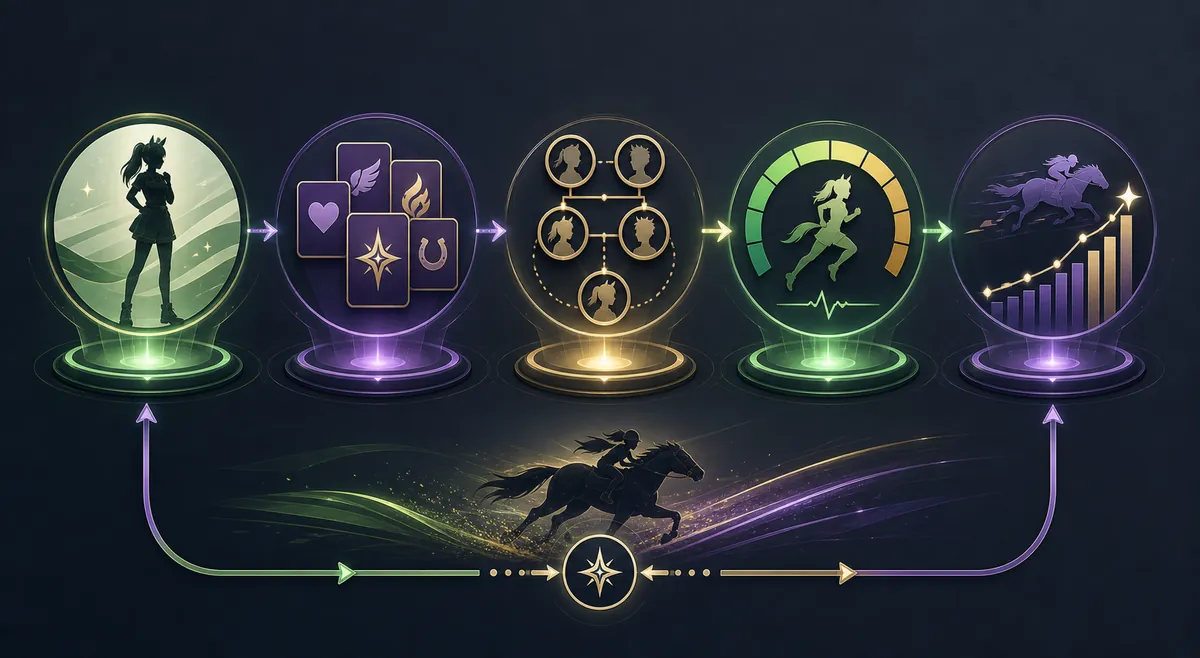
Wähle das Zielrennen
Notiere Distanz, Boden, Laufstil, Wetter- oder Kursannahmen und die gewünschte Siegbedingung.
Shortlist characters
Wähle nur Charaktere, deren Aptitude und Unique-Skill-Timing plausibel zum Ziel passen.
Prüfe den Vererbungsdruck
Markiere die roten Faktoren, Eltern-Unique-Skills und Statusfaktoren, die für einen realistischen Build nötig sind.
Plane das Supportdeck
Nutze eigene Karten und den geliehenen Slot für Wertewachstum, Skills, Erholung und Konstanz.
Trainiere und simuliere
Teste nach dem Training Stamina und Rennergebnisse. Ändere jeweils nur eine Variable, statt die ganze Tier-List verantwortlich zu machen.
Haeufige Fehler
Schlechte Entscheidungen entstehen meist durch ignorierte Annahmen.
- Eine JP-Liste für ein reines Global-Konto kopieren. Künftige Charaktere, Szenarien und Karten können das Ranking verändern. Nutze JP-Listen zur Planung, nicht als exakte Global-Build-Anleitung.
- Distanz und Boden ignorieren. Ein Charakter kann allgemein hoch bewertet sein und für dein Rennen trotzdem zu viele Vererbungsanpassungen brauchen.
- Die Stärke einer Supportkarte mit der Stärke des Charakters verwechseln. Ein starkes Deck kann viele Trainees tragen. Ein schwaches oder unpassendes Deck lässt auch Top-Trainees schlecht abschneiden.
- Die Stamina-Prüfung überspringen. Mittlere und lange Rennen bestrafen Builds, die nur auf Speed achten. Prüfe Stamina und Erholung, bevor du dem Ergebnis vertraust.
- Zu viele Variablen gleichzeitig ändern. Wenn das Simulationsergebnis schlecht ist, vergleiche jeweils nur eine Änderung: Eltern, Supportdeck, Erholung, Laufstil oder Skillpaket.
Rankings mit Tools nutzen
Die Tier List liefert eine Hypothese; Rechner und Simulation pruefen das Ergebnis.
Der beste Umamusume-Charakter ist nicht immer Platz eins einer allgemeinen Tier List. Waehle zuerst das Zielrennen und pruefe dann Distanz, Laufstil, Unique-Skill-Timing, Vererbung und Supportdeck.
Eine Supportkarten-Tier-List und eine Skill-Tier-List beantworten eine andere Frage: wie du den Charakter baust. Wenn du deine eigene Rangfolge erstellen willst, nutze den Tier List Maker statt diese Leitfadenseite mit einer interaktiven Funktion zu ueberladen.
Nuetzliche interne Ressourcen: Leitfaden zur Supportkarten-Tier-List, Vererbungsleitfaden, Stamina Calculator, Uma Race Planner, Leitfaden zum Trainingssimulator; Tier List Maker.
Quellen
Nutze diesen Leitfaden, um Trainees nach Distanz, Laufstil, Vererbung, Supportkarten und Simulation zu waehlen.
- Offizielle Website von Umamusume Pretty Derby - Offizieller Kontext zu Spiel und Charakteren innerhalb der Franchise.
- Umamusume Pretty Derby auf Steam - Offizieller PC-Shop-Eintrag und Kontext für Global-Spieler.
- GameTora-Umamusume-Datenbank - Community-Datenbank für Charaktere, Skills, Supports und Eventdetails.
Häufige Fragen
Welcher Charakter ist in Umamusume der beste?
Es gibt keinen besten Charakter fuer jedes Rennen. Entscheidend sind Distanz, Untergrund, Laufstil, Unique-Skill-Timing, Vererbung, Supportkarten und die Rennbedingungen.
Wie nutze ich eine Umamusume Charakter Tier List?
Waehle zuerst das Zielrennen und filtere die besten Charaktere nach Distanz, Laufstil, Unique-Skill-Timing, Vererbung und Supportdeck. Ein Tier ist eine Vorauswahl, keine Gewinn-Garantie.
Ist eine Umamusume Tier List fuer Global-Spieler nuetzlich?
Ja, wenn du Server und Datum pruefst. JP-Rankings sind Zukunftsplanung, solange die benoetigten Charaktere, Karten oder Szenarien auf Global noch fehlen.
Sollte ich zuerst Charakter- oder Supportkarten-Tier-Lists ansehen?
Beginne mit Rennen und Charakter-Fit und nutze danach die Supportkarten-Tier-List fuer den Build. Wenn dein Deck den Pick nicht traegt, waehle einen leichteren Charakter.
Koennen Charaktere aus niedrigen Tiers gewinnen?
Ja. Mit passenden Eltern, Supportdeck, Skills und Stamina kann ein niedriger eingestufter Charakter einen hoeheren Pick fuer das falsche Rennen schlagen.
Wie oft sollte ich Tier Lists neu pruefen?
Pruefe sie nach neuen Charakteren, Supportkarten, Szenarien, Balance-Aenderungen oder Eventbedingungen, die Distanz und Skill-Prioritaeten veraendern.
Ersetzt die Rennsimulation eine Tier List?
Nein. Die Tier List kuerzt die Kandidaten vor dem Training, die Simulation prueft die fertige Build. Zusammen liefern sie eine bessere Entscheidung.