
Como ler uma tier list
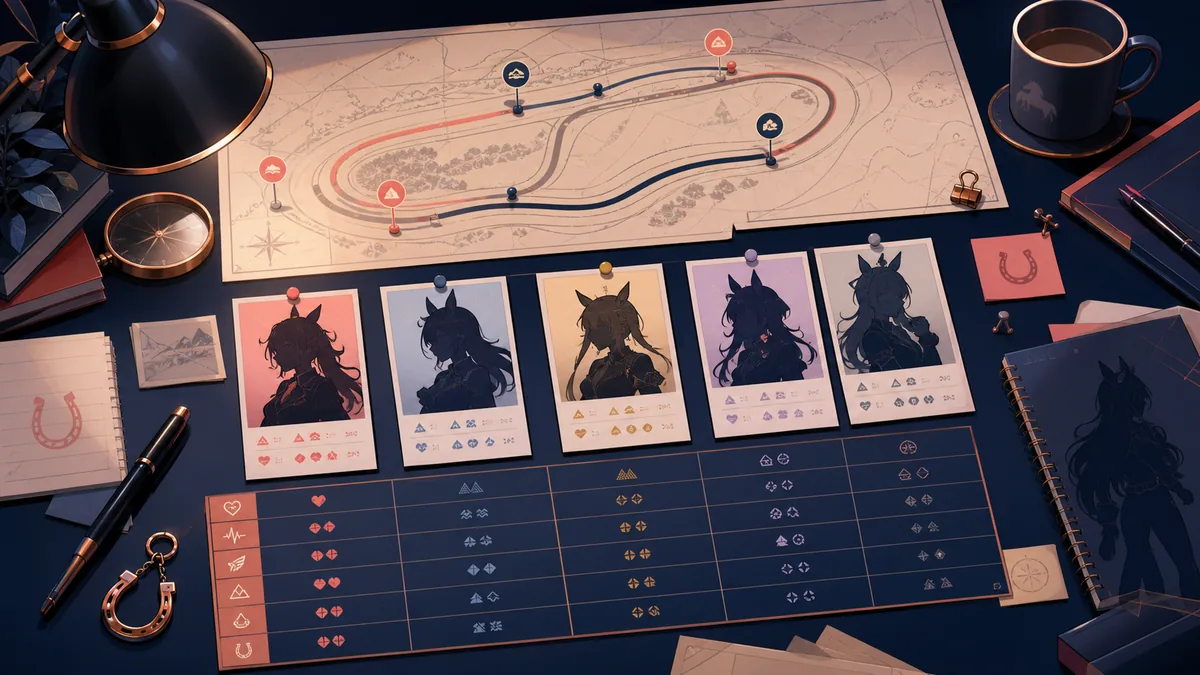
Uma tier list ajuda a reduzir candidatos, mas nao substitui o plano de corrida. Um personagem forte pode ficar comum se distancia, superficie ou timing mudarem.
Separe ranking de personagens e ranking de support cards: um escolhe o runner, o outro os recursos para construi-lo.
Jogadores Global devem checar servidor, data e suposicoes JP antes de copiar uma recomendacao.
Se voce procura uma tier list de personagens de Umamusume ou os melhores personagens de Umamusume, mantenha o mesmo limite: avalie o trainee para uma corrida especifica, nao para um ranking universal. O nivel real depende do encaixe entre kit e pista.
Uma tier list de Umamusume Pretty Derby deve informar se cobre Global, JP, conteudo atual ou futuro. Use-a como lista curta e confira support cards, heranca e simulacao antes de investir.
Use a tier list como shortlist
Anote distancia, superficie, estilo, skill unica, heranca e fraqueza do deck.
O que torna um personagem high tier
Trainees fortes combinam varias vantagens.
| Fatores importantes | Impact | Check |
|---|---|---|
| Aptidão de distância e superfície | A aptidão define se a corredora consegue alcançar o perfil da corrida sem desperdiçar espaços de herança. | Confira primeiro o circuito-alvo e depois decida quais fatores vermelhos ainda são necessários. |
| Running style fit | Builds de Runner, Leader, Betweener e Chaser exigem posicionamento, aceleração, stamina e timing de skills diferentes. | Compare o melhor estilo do personagem com a fase da corrida em que normalmente acontece a jogada decisiva. |
| Timing da skill única | Até uma skill única famosa pode ser fraca se ativar cedo demais, tarde demais ou em condições que a corrida não favorece. | Leia as condições de ativação e teste os atributos finais em vez de julgar apenas pelo nome. |
| Growth bonuses | Os bônus de crescimento mudam quais support cards são eficientes e quais atributos ficam difíceis de concluir. | Combine os bônus de crescimento com seu deck de support cards e o espaço emprestado. |
| Inheritance pressure | Alguns personagens precisam de fatores vermelhos, pais ou skills herdadas específicos para se tornarem práticos. | Confira se seu grupo de pais consegue resolver a falta de distância, superfície ou skills. |
| Contexto da conta e do servidor | Uma recomendação JP de alto nível pode depender de cartas, cenários ou personagens ainda indisponíveis para algumas contas Global. | Confirme o servidor, a data e as premissas do ranking antes de copiá-lo. |
A melhor escolha costuma ser a que deixa menos requisitos pendentes.
Melhor encaixe por distancia
Trainees fortes combinam varias vantagens.

| Focus | Traits | Deck | Check |
|---|---|---|---|
| Sprint | Aceleração rápida, crescimento consistente de Speed e timing confiável de skills em corridas curtas. | A pressão sobre Speed, Power e Wit pode ser alta, pois há pouco tempo para recuperar uma posição ruim. | Confirme que o build alcança rapidamente a velocidade final e não depende de skills tardias após a corrida ser decidida. |
| Mile | Ferramentas flexíveis de Speed, Power e posicionamento, com um estilo adequado ao circuito. | Os decks geralmente precisam de Wit suficiente para consistência, sem deixar de concluir Speed e Power. | Simule várias variantes, pois pequenas diferenças no timing das skills podem mudar bastante a taxa de vitória. |
| Medium | Kits equilibrados, bom timing da skill única e acesso suficiente a stamina ou recuperação. | O deck deve evitar investir demais em um atributo e deixar stamina, Power ou Wit vulneráveis. | Faça verificações de stamina e simulação antes de considerar seguro um build focado em Speed. |
| Long | Um bom plano de stamina, acesso a recuperação e skills únicas que continuem úteis no fim da corrida. | Support cards de stamina, recuperação e herança importam mais do que o rótulo de tier. | Confira primeiro a margem de stamina e depois compare a colocação final e a aceleração tardia. |
| Parent farming | Rotas de treino simples, fatores úteis e calendários de corrida fáceis de repetir. | Consistência, estabilidade de eventos e bônus de corrida podem importar mais do que o pico de desempenho PvP. | Use um planejador para alinhar metas de fatores, corridas e turnos de treinamento. |
Ajuste a supports e pais
Sua conta decide se o runner pode ser construido. Supports ou pais inadequados reduzem o valor pratico.
Escolha o caminho mais limpo: menos correcao de heranca, menos borrow obrigatorio e melhor margem de stamina.
O melhor personagem de Umamusume nem sempre e o primeiro de uma tier list generica. Escolha primeiro a corrida, depois avalie distancia, estilo, timing da skill unica, heranca e support deck.
Owned support fit
Seu deck consegue concluir os atributos necessários sem pegar emprestado cada função que falta?
Parent pool fit
Seus pais resolvem a falta de distância, superfície, skill única ou fatores?
Scenario fit
O cenário de treinamento atual favorece os atributos e eventos de que este personagem precisa?
Testing fit
O build final passa pelos testes de stamina e simulação, em vez de parecer bom apenas no papel?
Fluxo de validacao
Use este ciclo quando varios personagens parecem bons para o mesmo evento.
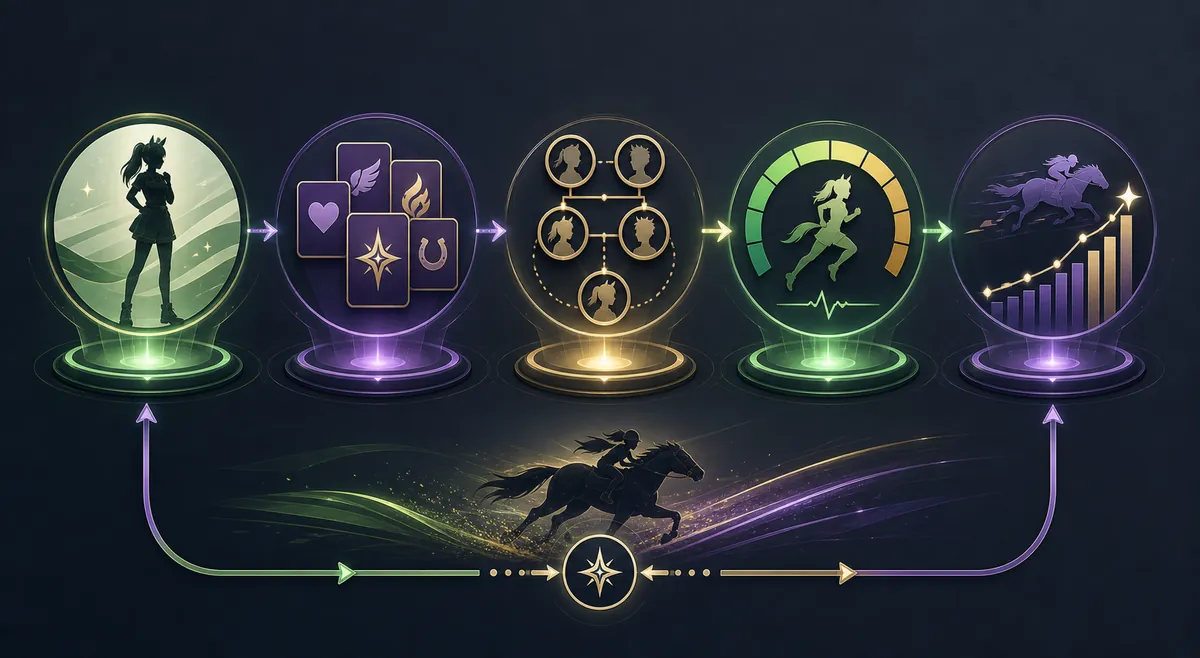
Escolha a corrida-alvo
Registre distância, superfície, estilo, clima ou premissas do circuito e a condição de vitória desejada.
Shortlist characters
Escolha apenas personagens cuja aptidão e timing da skill única combinem com esse objetivo.
Verifique a pressão da herança
Marque os fatores vermelhos, únicas dos pais e fatores de atributos necessários antes de considerar o build viável.
Monte o deck de support cards
Use suas cartas e o espaço emprestado para cobrir crescimento de atributos, acesso a skills, recuperação e consistência.
Treine e simule
Depois do treino, teste stamina e resultados de corrida. Mude uma variável por vez em vez de culpar toda a tier list.
Erros comuns
Escolhas ruins geralmente nascem de suposicoes ignoradas.
- Copiar uma lista JP para uma conta apenas Global. Personagens, cenários e cartas futuras podem mudar o ranking. Use listas JP para planejar, não como receita exata para Global.
- Ignorar distância e superfície. Um personagem pode estar no topo em geral e ainda exigir correções demais na herança para a corrida escolhida.
- Confundir a força de uma support card com a força do personagem. Um deck forte pode fazer muitas trainees funcionarem. Um deck fraco ou incompatível pode derrubar o desempenho de uma trainee excelente.
- Pular a validação de stamina. Corridas médias e longas costumam punir builds que olham apenas para Speed. Confira stamina e recuperação antes de confiar no resultado.
- Mudar variáveis demais de uma vez. Se o resultado da simulação for ruim, compare uma mudança por vez: pais, deck de supports, recuperação, estilo ou pacote de skills.
Use rankings com ferramentas
A tier list cria uma hipotese; calculadoras e simulacao validam o build.
O melhor personagem de Umamusume nem sempre e o primeiro de uma tier list generica. Escolha primeiro a corrida, depois avalie distancia, estilo, timing da skill unica, heranca e support deck.
A tier list de support cards e a tier list de skills respondem a outra pergunta: como construir o personagem. Se quiser organizar suas proprias opcoes, use o Tier List Maker para a intencao funcional em vez de misturar ranking e ferramenta.
Recursos internos uteis: Guia de tier list de support cards, Inheritance Guide, Stamina Calculator, Uma Race Planner, Guia do simulador de treinamento; Tier List Maker.
Fontes
Use este guia para escolher trainees por distancia, estilo, heranca, support cards e testes no simulador.
- Site oficial de Umamusume Pretty Derby - Contexto oficial do jogo e dos personagens dentro da franquia.
- Umamusume Pretty Derby na Steam - Página oficial da loja para PC e contexto para jogadores Global.
- Base de dados de Umamusume no GameTora - Base comunitária para consultar personagens, skills, supports e detalhes de eventos.
FAQ
Qual e o melhor personagem de Umamusume?
Nao existe um personagem melhor para todas as corridas. A escolha depende de distancia, superficie, estilo, timing da skill unica, heranca, support cards e condicoes do evento.
Como uso uma tier list de personagens de Umamusume?
Comece pela corrida-alvo e filtre os melhores personagens por distancia, estilo, timing da skill unica, heranca e support deck. O tier e uma lista curta, nao uma garantia de vitoria.
Uma tier list de Umamusume ajuda jogadores Global?
Sim, se voce conferir servidor e data. Rankings baseados em JP servem como planejamento futuro quando personagens, cartas ou cenarios ainda nao chegaram ao Global.
Devo ver personagens ou support cards primeiro?
Comece pela corrida e pelo encaixe do personagem; depois use a tier list de support cards para monta-lo. Se seu deck nao sustenta a escolha, prefira um caminho mais simples.
Personagens de tier baixo podem ganhar?
Sim. Com pais, deck, skills e stamina corretos, um personagem de tier baixo pode superar um personagem melhor ranqueado usado na corrida errada.
Com que frequencia devo revisar as tier lists?
Revise depois de novos personagens, support cards, cenarios, mudancas de balanceamento ou condicoes de evento que alterem distancia e prioridade de skills.
A simulacao substitui uma tier list?
Nao. A tier list reduz candidatos antes do treino e a simulacao valida a build final. As duas ferramentas se complementam.