
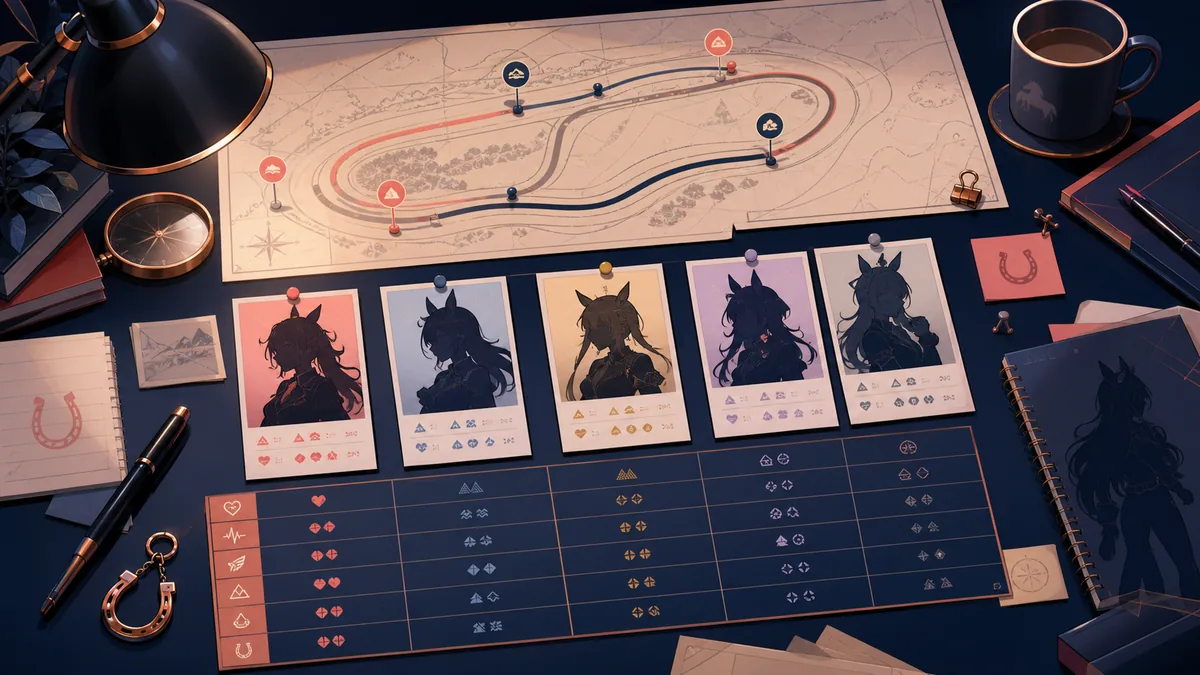
Comment lire une tier list de personnages
Une tier list sert a reduire les candidats, pas a remplacer le plan de course. Un personnage excellent dans une condition peut devenir moyen si la distance, la surface ou le timing de skill changent.
Separez personnage et support cards : le premier choisit le runner, le second choisit les ressources pour le construire.
Pour Global, verifiez toujours serveur, date et hypotheses JP avant de copier une recommandation.
Si vous cherchez une tier list des personnages Umamusume ou les meilleurs personnages Umamusume, gardez la meme limite : evaluez chaque trainee pour une course precise, pas pour un classement universel. Le bon niveau depend de l adequation entre le kit et le circuit.
Une tier list Umamusume Pretty Derby doit preciser si elle vise Global, JP, le contenu actuel ou le contenu futur. Utilisez-la comme shortlist, puis verifiez supports, heritage et simulation avant d investir.
Utilisez la tier list comme shortlist
Notez distance, surface, style, skill unique, heritage et faiblesse du deck avant de choisir.
Ce qui rend un personnage high tier
Les bons trainees combinent plusieurs avantages.
| Facteurs importants | Impact | Check |
|---|---|---|
| Aptitude de distance et de surface | L’aptitude détermine si la coureuse peut atteindre de manière réaliste le profil de la course sans gaspiller de slots d’héritage. | Vérifiez d’abord le parcours cible, puis les facteurs rouges encore nécessaires. |
| Running style fit | Les builds Runner, Leader, Betweener et Chaser demandent un placement, une accélération, une endurance et un timing de skills différents. | Comparez le meilleur style du personnage avec la phase où l’action décisive intervient généralement. |
| Timing de la skill unique | Même une skill unique célèbre peut être faible si elle se déclenche trop tôt, trop tard ou dans des conditions que la course ne favorise pas. | Lisez les conditions d’activation et testez les statistiques finales au lieu de juger sur le nom. |
| Growth bonuses | Les bonus de croissance changent l’efficacité des support cards et les statistiques difficiles à terminer. | Adaptez les bonus de croissance à votre deck de supports et à votre slot emprunté. |
| Inheritance pressure | Certains personnages ont besoin de facteurs rouges, de parents ou de skills héritées précises pour devenir pratiques. | Vérifiez si votre pool de parents peut résoudre le manque de distance, de surface ou de skill. |
| Contexte du compte et du serveur | Une recommandation JP de premier plan peut dépendre de cartes, scénarios ou personnages encore indisponibles pour certains comptes Global. | Confirmez le serveur, la date et les hypothèses du classement avant de le recopier. |
Le meilleur choix est celui qui laisse le moins de problemes non resolus pour votre compte.
Meilleur choix par distance
Les bons trainees combinent plusieurs avantages.

| Focus | Traits | Deck | Check |
|---|---|---|---|
| Sprint | Accélération rapide, progression propre de Speed et timing fiable des skills sur courte distance. | La pression sur Speed, Power et Wit peut être élevée, car il reste peu de temps pour corriger un mauvais placement. | Vérifiez que le build atteint vite sa vitesse finale et ne dépend pas de skills tardives après la décision de la course. |
| Mile | Outils flexibles de Speed, Power et placement, avec un style adapté au parcours. | Les decks ont souvent besoin de suffisamment de Wit pour la régularité tout en terminant Speed et Power. | Simulez plusieurs variantes : de petites différences de timing peuvent modifier fortement le taux de victoire. |
| Medium | Kit équilibré, timing utile de la skill unique et accès suffisant à l’endurance ou à la récupération. | Le deck doit éviter de surinvestir une statistique en laissant Stamina, Power ou Wit exposés. | Lancez des vérifications d’endurance et de simulation avant de considérer un build orienté Speed comme sûr. |
| Long | Plan d’endurance solide, accès à la récupération et skills uniques encore utiles dans la dernière phase. | Les supports d’endurance, la récupération et l’héritage comptent davantage que l’étiquette du tier. | Vérifiez d’abord la marge d’endurance, puis comparez la position finale et l’accélération tardive. |
| Parent farming | Parcours d’entraînement simples, facteurs utiles et calendriers de courses reproductibles. | La régularité, la stabilité des événements et le bonus de course peuvent compter plus que le plafond PvP. | Utilisez un planificateur pour aligner les objectifs de facteurs, les courses et les tours d’entraînement. |
Ajuster le choix a vos supports et parents
Votre compte decide si le runner peut vraiment etre construit. Un deck ou des parents inadaptes font baisser la valeur pratique.
Choisissez la route la plus propre : moins de corrections d heritage, moins de borrow obligatoire et une meilleure marge de stamina.
Le meilleur personnage Umamusume n est pas toujours le premier d une tier list generale. Choisissez d abord la course, puis verifiez distance, style, timing de skill unique, heritage et support deck avec votre compte.
Owned support fit
Votre deck peut-il terminer les statistiques nécessaires sans emprunter chaque rôle manquant ?
Parent pool fit
Vos parents résolvent-ils les besoins de distance, de surface, de skill unique ou de facteurs ?
Scenario fit
Le scénario d’entraînement actuel récompense-t-il les statistiques et les événements dont ce personnage a besoin ?
Testing fit
Le build terminé passe-t-il les vérifications d’endurance et de simulation au lieu de sembler bon seulement sur le papier ?
Flux de validation
Utilisez ce cycle quand plusieurs personnages semblent proches.
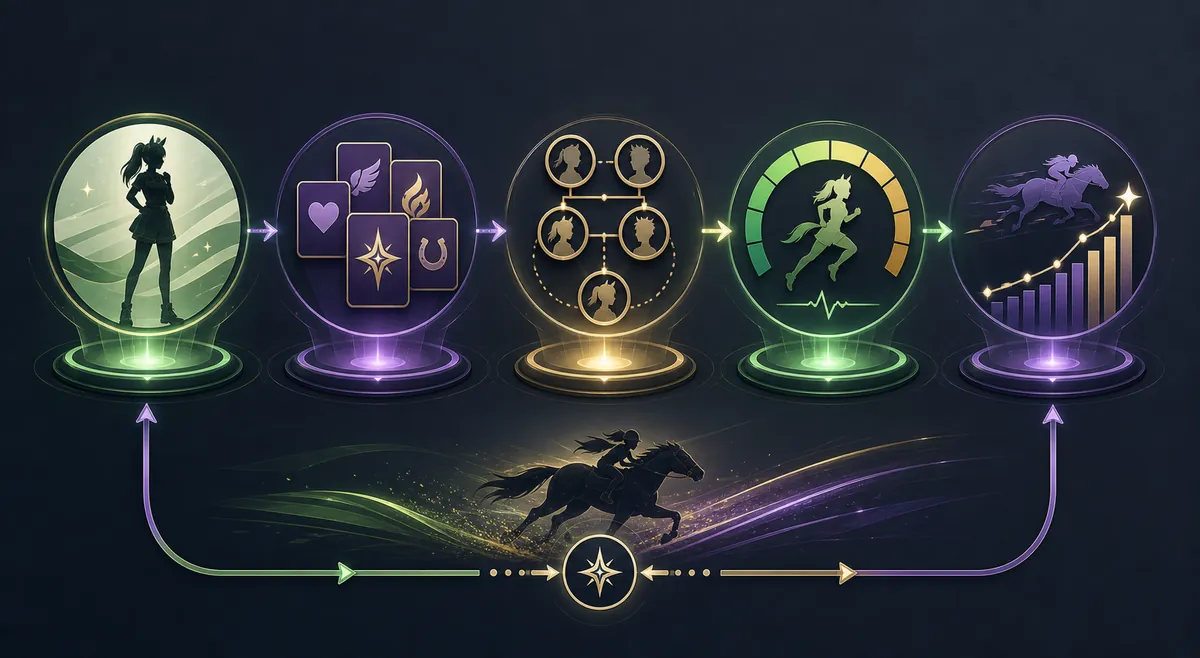
Choisissez la course cible
Notez la distance, la surface, le style, la météo ou les hypothèses du parcours et la condition de victoire visée.
Shortlist characters
Choisissez seulement des personnages dont l’aptitude et le timing de skill unique correspondent plausiblement à cet objectif.
Vérifiez la pression de l’héritage
Indiquez les facteurs rouges, uniques des parents et facteurs de statistiques nécessaires avant de considérer le build réaliste.
Cartographiez le deck de supports
Utilisez vos cartes et le slot emprunté pour couvrir la croissance des statistiques, l’accès aux skills, la récupération et la régularité.
Entraînez et simulez
Après l’entraînement, testez l’endurance et les résultats de course. Changez une variable à la fois au lieu d’accuser toute la tier list.
Erreurs communes
Les mauvaises decisions viennent souvent d hypotheses ignorees.
- Copier une liste JP pour un compte uniquement Global. Les personnages, scénarios et cartes à venir peuvent changer le classement. Utilisez les listes JP pour planifier, pas comme recette exacte pour Global.
- Ignorer la distance et la surface. Un personnage peut être haut placé en général et pourtant nécessiter trop de corrections d’héritage pour la course choisie.
- Confondre la puissance d’une support card avec celle du personnage. Un deck solide peut rendre efficaces de nombreuses trainees. Un deck faible ou mal adapté peut faire sous-performer une trainee de haut niveau.
- Sauter la validation de l’endurance. Les courses moyennes et longues punissent souvent les builds qui ne regardent que Speed. Vérifiez l’endurance et la récupération avant de faire confiance au résultat.
- Changer trop de variables à la fois. Si le résultat de simulation est mauvais, comparez un seul changement à la fois : parents, deck de supports, récupération, style ou ensemble de skills.
Utiliser rankings et outils
La tier list propose une hypothese; les calculateurs et la simulation montrent si le build fonctionne.
Le meilleur personnage Umamusume n est pas toujours le premier d une tier list generale. Choisissez d abord la course, puis verifiez distance, style, timing de skill unique, heritage et support deck avec votre compte.
La tier list des support cards et la tier list des skills repondent a une autre question : comment construire le personnage. Pour classer vos options vous-meme, utilisez Tier List Maker au lieu de melanger une fonction interactive avec ce guide.
Ressources internes utiles: Guide de tier list des support cards, Inheritance Guide, Stamina Calculator, Uma Race Planner, Guide du simulateur d’entraînement; Tier List Maker.
Sources
Utilisez ce guide pour choisir un trainee selon la distance, le style, l heritage, les supports et les tests de simulation.
- Site officiel d’Umamusume Pretty Derby - Contexte officiel du jeu et de ses personnages au sein de la franchise.
- Umamusume Pretty Derby sur Steam - Fiche officielle du magasin PC et contexte pour les joueurs Global.
- Base de données Umamusume de GameTora - Base communautaire pour consulter les personnages, skills, supports et détails des événements.
FAQ
Quel est le meilleur personnage dans Umamusume ?
Il n existe pas un meilleur personnage pour toutes les courses. Le choix depend de la distance, de la surface, du style, du timing de la skill unique, de l heritage, des supports et des conditions.
Comment utiliser une tier list de personnages Umamusume ?
Commencez par la course cible, puis filtrez les meilleurs personnages selon la distance, le style, le timing de la skill unique, l heritage et le support deck. Un rang est une shortlist, pas une garantie.
Une tier list Umamusume est-elle utile pour Global ?
Oui, si vous verifiez le serveur et la date. Les classements bases sur JP servent de planification future lorsque les personnages, cartes ou scenarios ne sont pas encore disponibles sur Global.
Faut-il regarder les personnages ou les support cards en premier ?
Commencez par la course et l adequation du personnage, puis utilisez la tier list des support cards pour le construire. Si votre deck ne peut pas le soutenir, choisissez une option plus accessible.
Un personnage de tier basse peut-il gagner ?
Oui. Avec les bons parents, le bon deck, les bonnes skills et une marge de stamina suffisante, il peut battre un personnage mieux classe mais mal adapte.
A quelle frequence revoir les tier lists ?
Revoyez-les apres une sortie de personnage ou de support card, un nouveau scenario, une mise a jour d equilibre ou un changement de conditions d evenement.
La simulation remplace-t-elle une tier list ?
Non. La tier list reduit le nombre de candidats avant l entrainement et la simulation valide la build finale. Les deux outils sont complementaires.